



At RE+ 2025, one theme seemed to dominate every conversation: how utility-scale solar EPCs, developers and owners can work with partners they trust to deliver projects that are cost effective, insurable, and built to last. Whether the challenge is extreme weather, maximizing system uptime, or meeting domestic content requirements, the industry is focused on reducing risk and protecting returns.
What stood out to me the most was that the solutions drawing the most attention weren’t flashy gimmicks—they were customer-centered technologies that directly address real-world project pain points. From PV trackers that can withstand record hailstorms to foundations that cut grading time, the future of solar resilience is about helping our EPC and developer partners hit project timelines, lower costs, and help maximize energy generation over the life of the project.
ARRAY was part of that story. Across sessions, interactive tracker demos, and customer meetings, we shared how our latest advancements—like ARRAY DuraTrack Hail XP™, improved ARRAY SmarTrack® software and integrations, and APA’s foundation systems—are being deployed on projects to help reduce O&M costs, simplify construction, and increase energy production.
Here are the team’s biggest takeaways from RE+ 2025 and how ARRAY is working alongside our customers to address them:
- Seamless Compatibility with our Foundation Solutions
- Weather Resilience Is No Longer Optional
- Domestic Content Is Now a Decisive Factor in American Solar Project Success
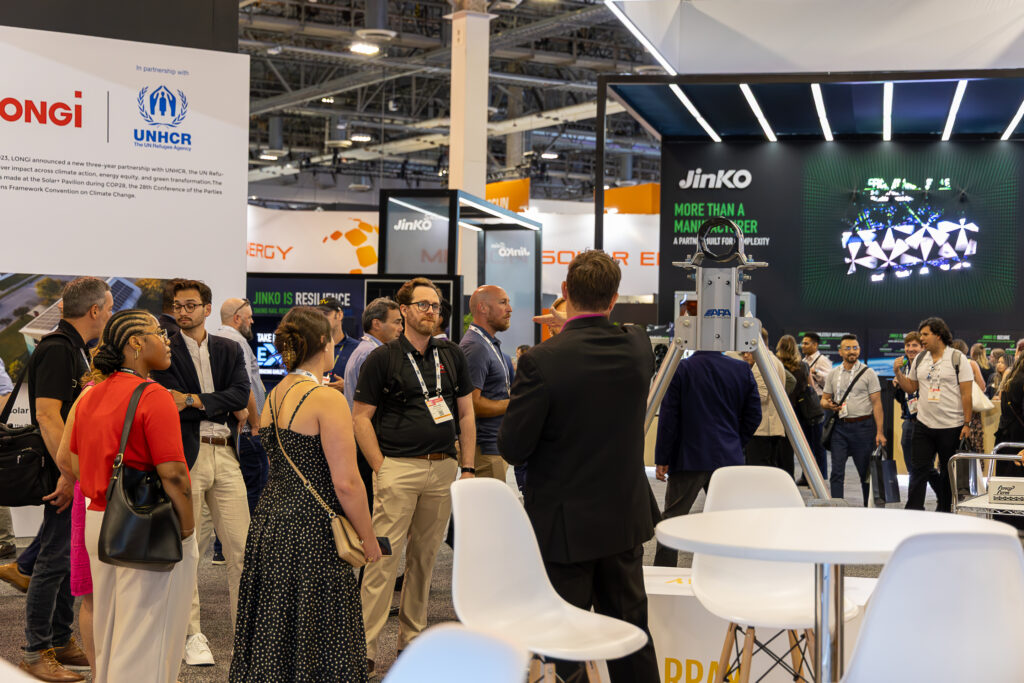 RE+ 2025, Day 2 of the trade show, September 10, 2025
Seamless Compatibility with our Foundation Solutions
The challenge: Selecting the right foundation is crucial to fostering a solar plant’s long-term reliability. Site owners, developers, and EPCs should carefully pair solar trackers with the right foundation to withstand harsh weather and challenging soil conditions.
The solution: With APA’s foundation expertise now part of ARRAY, we’ve simplified tracker-to-foundation integration, delivering a robust solution for solar projects, particularly in regions with difficult soils and terrain. APA specializes in advanced foundations and interfaces designed for solar trackers, engineered to excel in rocky soil, frost-heave areas, and other tough environments. ARRAY, a global leader in solar tracker technology, is known for its durability, reliability, and efficiency in maximizing energy production. As one company, we provide a seamless, high-performance solution for solar projects in even the most demanding conditions.
Why it matters: At RE+ 2025, customers were eager to hear about the combined expertise of ARRAY and APA. We’re presenting solar project developers and EPCs with a premier tracker + foundation solution to meet any challenging conditions, including rocky, frost-prone, undulating, and tough terrains.
Weather Resilience Is No Longer Optional
The challenge: Hail and wind are no longer “edge cases”—they’ve become central to procurement, insurance, and bankability decisions. Developers, insurers, and long-term asset owners are all demanding systems that can withstand increasingly volatile weather.
The solution: ARRAY’s resilience portfolio—including Hail XP, ARRAY SmarTrack® Hail Alert Response, and ARRAY’s patented passive wind stow—delivers automated stow, advanced monitoring, and field-validated performance while reducing production loss caused by high wind events. High-angle trackers combined with thicker module glass can reduce risk exposure by as much as 90% in high-hail regions, while our focus on “confidence of stow*” helps ensure systems respond reliably when it matters most. Furthermore, ARRAY, since inception, has designed our trackers to withstand high wind loads at full tilt. Site owners can stow with confidence for both hail and wind without increasing the number of piles or the strength of the foundations. Hail XP, SmarTrack Hail Alert Response, and passive wind stow provide site owners with a robust portfolio to handle the worst scenarios that Mother Nature can present.
Why it matters: Weather risk was one of the most discussed topics across panels and customer meetings during the show. On “The Impact of Extreme Weather Events on PV Design” panel, Evan Nichols, ARRAY’s director of technical sales, emphasized that resilience is now a baseline requirement—not an add-on. Paul Brown, managing partner with The Baldwin Group, reinforced that premiums are a math equation: lower risk = lower cost. And the industry-wide call for more granular field data underscored a clear trend—projects that can prove resilience through validated performance and real-world data will have a strategic edge in securing financing and lowering insurance costs.
*Note: “Confidence of stow” refers to the probability that a tracker system will successfully move to and maintain its protective position during a weather event. Higher confidence = greater assurance the system will respond as intended when it matters most.
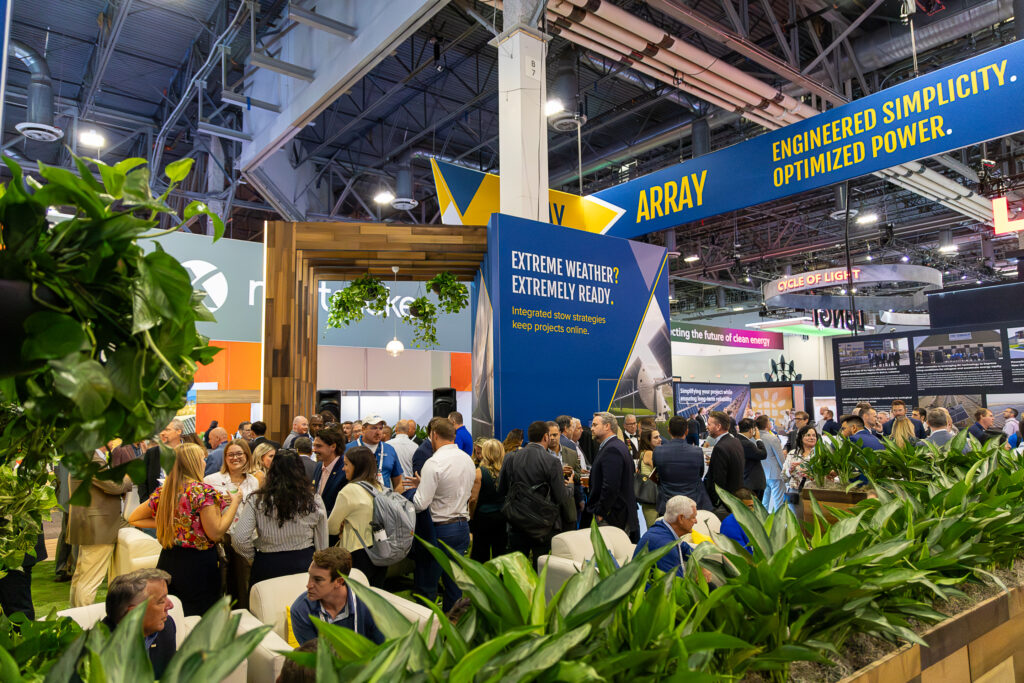
RE+ 2025, Day 1 of the trade show, September 10, 2025
Domestic Content Is Now a Decisive Factor in American Solar Project Success
The challenge: Developers are under increasing pressure to prove domestic content—not only to qualify for IRA incentives, but also to secure community acceptance and reduce exposure to global supply chain volatility.
The solution: ARRAY can now offer trackers that deliver 100% of the domestic content Assigned Cost Percentage (ACP) under the U.S. Treasury Department’s latest guidance (Notice 2025-08, issued January 2025). This capability is backed by a validated third-party “should” level opinion and certifications from our supply chain partners to help mitigate procurement risk.
Why it matters: The message from developers has been clear: domestic content is a decisive factor in enabling customers to maximize their tax credits. The Emerald Green Solar project in Indiana, developed by ENGIE North America, is already providing a real-world case of how ARRAY’s fully domestic trackers can support both project economics and community benefits.
Looking Ahead
Overall, what stood out to me the most was how unified the conversation has become around a few core priorities:
- reducing risk,
- integrated solutions under the panel, and
- ensuring projects perform for the long haul
Whether the topic was weather resilience, domestic content or integrated solutions, the common thread was clear—EPCs count on ease of install and owners want confidence that their investments will stand up to real-world pressures and keep delivering value.
As I look ahead, the way I see it, ARRAY’s role will be to continue supporting our customers, anticipating challenges, validating performance, and designing solutions that make projects more resilient.